You’ve read the books, bought the tracker and tightened the routine. The Recovery Deficit reveals a factor many capable people overlook: the gap between what life demands and what they currently have the capacity to recover from.
“The core idea is compelling — performance cannot exceed recovery capacity.”
“It’s such an easy read.”
“I felt like the first four chapters were talking directly to me.”
Seven hours in bed. Maybe eight. And the first thought of the day isn't a thought at all, it's a calculation. How am I going to get through today?
The work still gets done. That's the confusing part. You run the business, make the breakfast, hit the session three mornings a week, answer the message at 9pm. Nobody around you sees a problem.
Then you sit on the floor while one of your kids tells a story with no end, and some part of you has already left the room. You're managing the moment instead of living it.
"I'm exhausted, but I'm doing everything right." "I'm sleeping, but I still feel tired." "I feel like I've lost my edge." "Maybe this is just who I am now."
If that sounds familiar, it may be worth looking at the pattern underneath it.
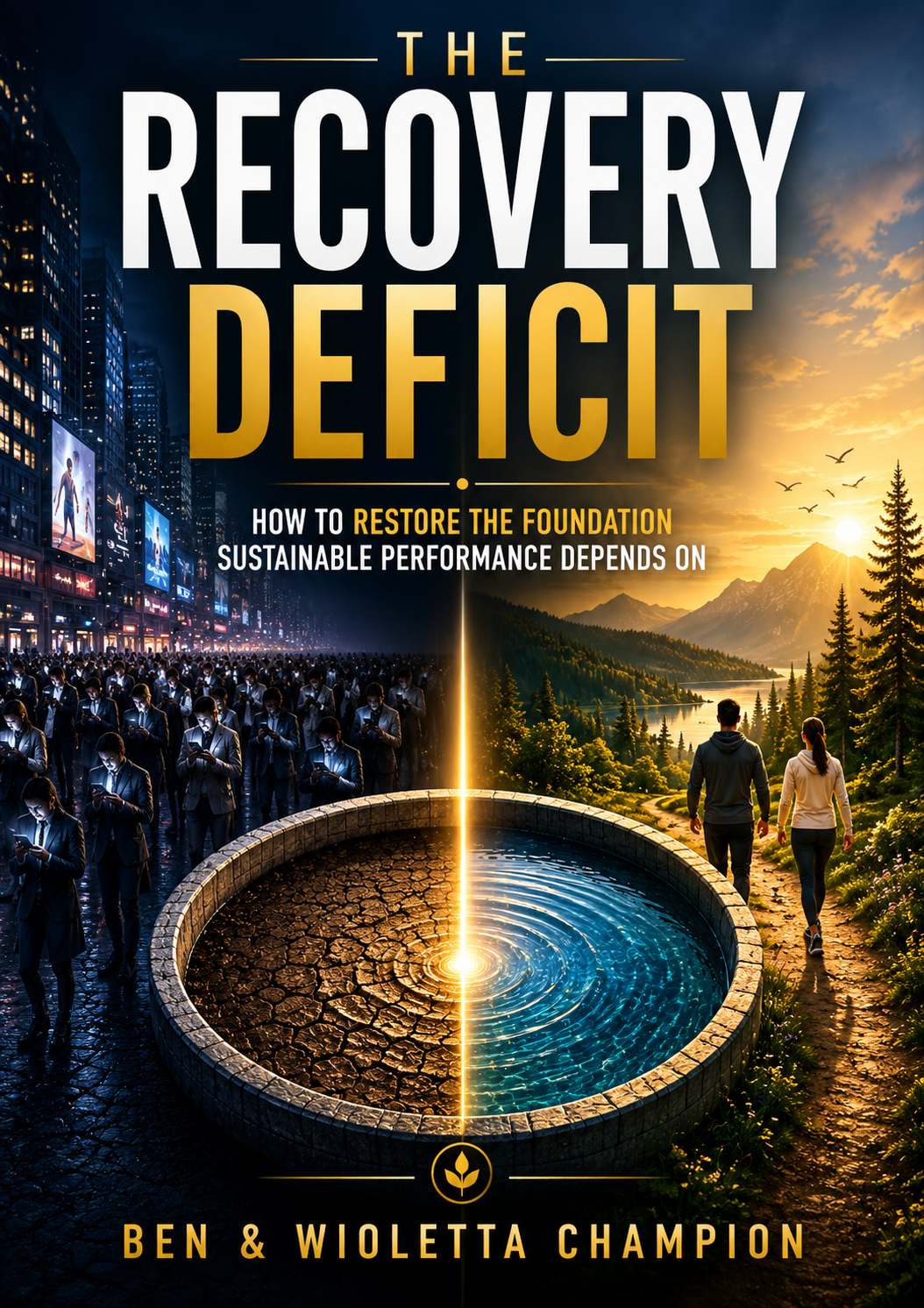
One factor that can be easy to miss is the growing gap between what life demands and what you are consistently recovering from. Ben & Wioletta Champion call that the Recovery Deficit.
The belief you're operating on is simple: more is always better. More training, more effort, more discipline, more sacrifice. Recovery is what you earn after the work is done.
It's a reasonable belief because for most of your life it worked. Study harder, the marks improve. Practise more, the skill develops. Train consistently, the body adapts. Effort has history on its side.
That pattern can become costly when your Recovery Capacity is already stretched. When energy drops and you respond by adding something, you've added another demand to a system that was already stretched. The discipline that built you starts widening the gap.
That’s the Performance Trap. It often shows up in people who care deeply, carry responsibility and are used to solving problems with more effort.
Somewhere in your house is the evidence of how hard you've tried. A resistance band still in its packaging. Half-finished supplement bottles. A sleep tracker that became one more thing to worry about. A training plan life interrupted.
Those attempts are useful information. They show you were willing to try.
The problem is that every strategy lands on the condition of the person using it. Fertilise a garden during a drought and there may be nothing wrong with the fertiliser. The conditions underneath it simply can't use what you're adding.
A hard session builds you when you can recover from it. The same session on top of poor sleep, a demanding week and emotional load is a different event entirely. The programme didn't go bad. The context changed.
That can leave you searching for a better strategy, when the more useful question may be whether you currently have the capacity to benefit from the strategies you already know.
For most of my adult life I made a living helping other people perform. I ran events, coached golfers, built businesses. And the whole time I was slowly becoming evidence that I hadn't worked something out in my own body.
There was no crash. No collapse. No hospital.
What I experienced was quieter. Energy that had once been automatic became something I had to manufacture. Clarity got softer around the edges. The competitive edge I'd trusted my whole life became harder to find. I couldn't tell you the day it changed, and that was part of the problem.
I started at the Australian Institute of Sport as a high jumper, coached by June Ferguson. Australian and New Zealand School Boys Champion. I jumped the qualifying height for the World Junior Championships and reached a Commonwealth Games standard. Later came professional golf, competition across three continents and more than thirty years in the golf industry, business and entrepreneurship.
Performance was familiar territory. So was effort.
When my energy dropped, I added something. Another commitment. Another early start. Another discipline. It never felt like a mistake. It felt responsible.
For years I blamed everything else. Age. Travel. Stress. Business. Family. A life that never stopped asking. I never questioned the pattern underneath them, and that cost me time I'd rather have back.
Wioletta was seeing the other half of the same picture. Across more than thirty years in fitness and wellbeing, she watched capable people arrive frustrated by bodies that had stopped responding, especially through midlife. Their answer was always the same. Train harder. Tighten the diet. Push. And often what disappeared next wasn't their commitment. It was their life getting smaller.
Recovery is not the reward for a life well lived. It is the foundation of one.
Performance is an expression of capacity.
Not willpower. Not character. Capacity, and capacity depends on your ability to recover from what you repeatedly ask of yourself.
Picture a reservoir. Demand draws from it. Recovery refills it. You don't need it full every moment, and there will be seasons that draw heavily. The question that decides everything is whether the level gets a chance to rise again, or whether the next demanding month starts from the lower level the last one left behind.
Most people notice the big withdrawals. The late night. The deadline. The hard session. What they miss are the leaks. The phone that keeps work psychologically present after work has finished. The recovery day turned into another performance target. The half hour of sleep traded away because each individual night feels manageable.
No single leak empties a reservoir. The pattern does.
The order matters because each stage creates better conditions for what follows. As capacity changes, you can return to the Five R’s and adjust the emphasis where needed. Start at the beginning and you give each stage a stronger foundation to build from.
“I felt like the first four chapters were talking directly to me. The framework made me think about my current health and energy levels — and what I need to change.”
“The core idea is compelling: performance cannot exceed recovery capacity. It also made me realise that energy is more important than time.”
“It’s such an easy read, which is important for me as a busy mother juggling work, a household and faith commitments.”
A book designed to help readers recognise the gap between what life demands and what they currently have the capacity to recover from.

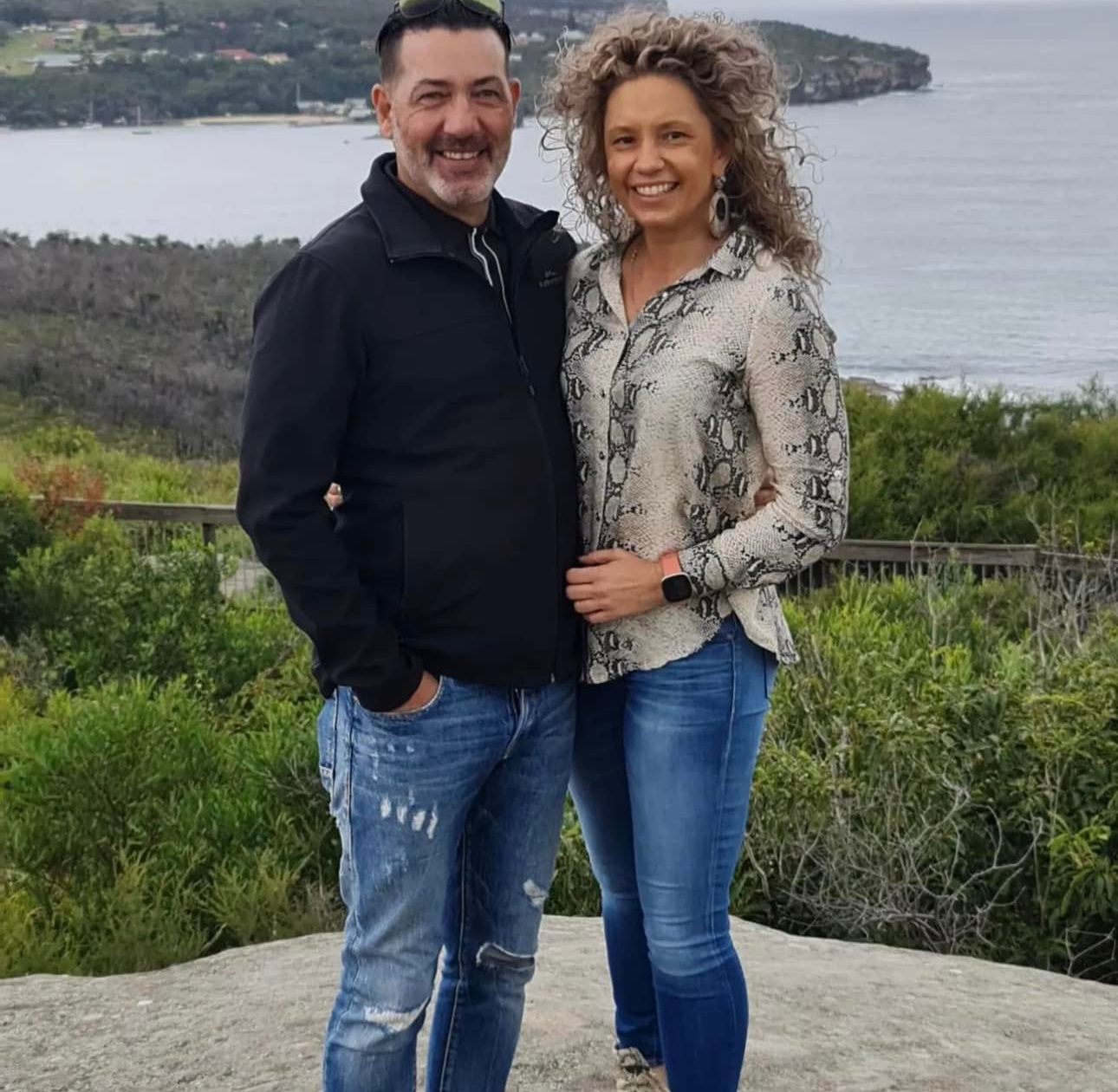
Ben & Wioletta Champion are the co-founders of Champion Recovery and the authors of The Recovery Deficit. They developed the Five R’s of the Champion Recovery System™ as a practical framework for building Recovery Capacity and supporting more sustainable performance.
Ben came to it through performance environments: the Australian Institute of Sport as a high jumper, Australian and New Zealand School Boys Champion, professional golf across three continents, and more than thirty years in the golf industry, business and entrepreneurship. His experience gave him a close understanding of what happens when high standards, ambition and responsibility keep driving demand beyond what the system can sustainably recover from.
Wioletta came to the same conclusion from another direction, across more than thirty years working with people in fitness and wellbeing. Her experience gave her a close view of how people can keep asking more from themselves through midlife, even as recovery, strength and resilience become harder to maintain.
Together, they bring their personal and professional experience to work focused on helping adults in midlife better understand recovery, capacity and sustainable performance.
Picture a future morning when you wake and feel more like yourself again. You wake with more consistency in how you feel, and the first hour no longer feels like a negotiation with your own body.
A meeting runs long, a child needs you, plans change, and you handle it without spending the rest of the day recovering from one difficult hour.
By evening there's still some part of you left. Enough to listen. Enough to laugh. Enough to accept an invitation instead of calculating how soon you could go to bed.
That person is already there. Greater Recovery Capacity can help make more of them available again.
Read The Recovery Deficit, understand where you are, then decide what your next step should be.